Baseplates on a Table or a Wall: A Practical Guide
A build table is the simplest upgrade a brick family can make. Here is how to set one up with our plates, when a wall panel makes more sense, and what each option costs per square inch of building space.
Three ways to give bricks a floor
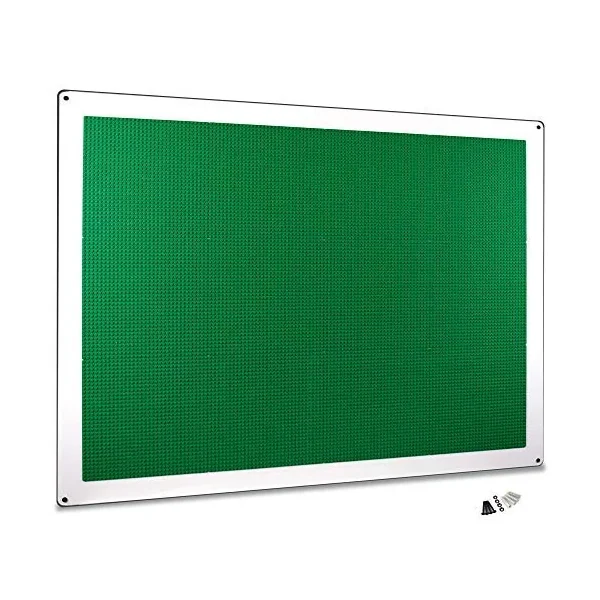
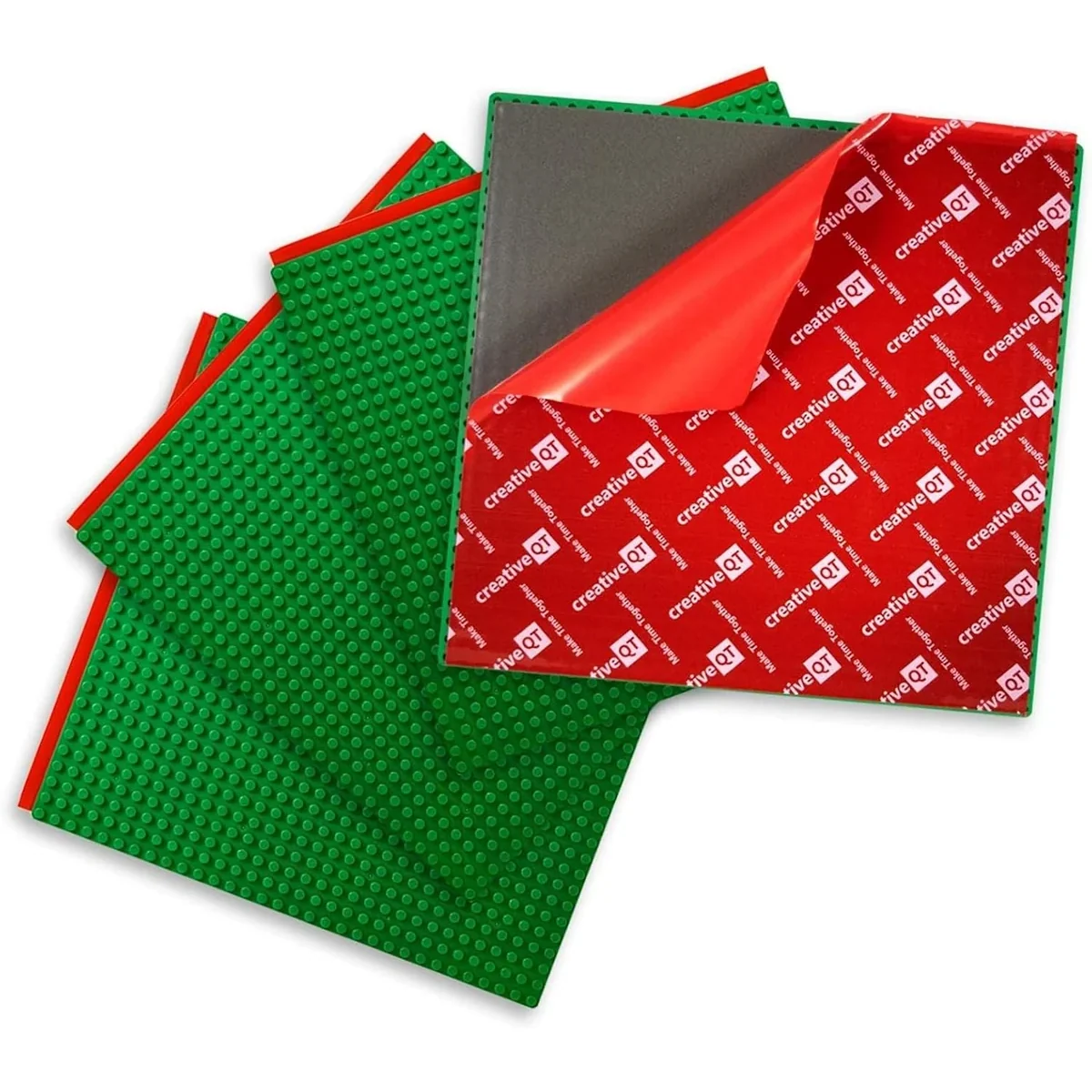
There are three ways to give bricks somewhere to stand, and they suit different rooms. Peel-and-stick plates turn a table top into a permanent build surface. Loose plates make trays you can move. A wall panel takes the build off the floor and off the table altogether.
| Product | Size | Sq in | From | Per sq in |
|---|---|---|---|---|
| Peel-and-Stick Baseplates | 4 × 100 sq in | 400 | $24.98 | $0.062 |
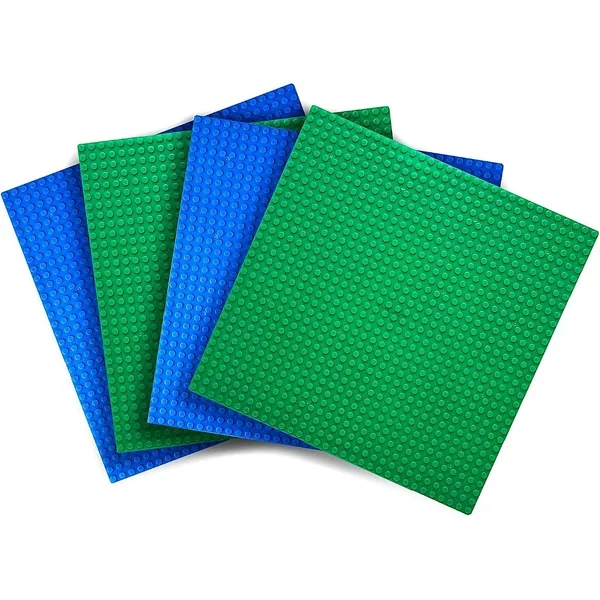
| Stackable Baseplates | 4 × 100 sq in | 400 | $9.99 | $0.025 |
| Play-Up Brick Wall Panel | 24 × 34 in | 816 | $34.99 | $0.043 |
| Play-Up Brick Wall Panel | 34 × 44 in | 1496 | $221.48 | $0.148 |
Choosing the table
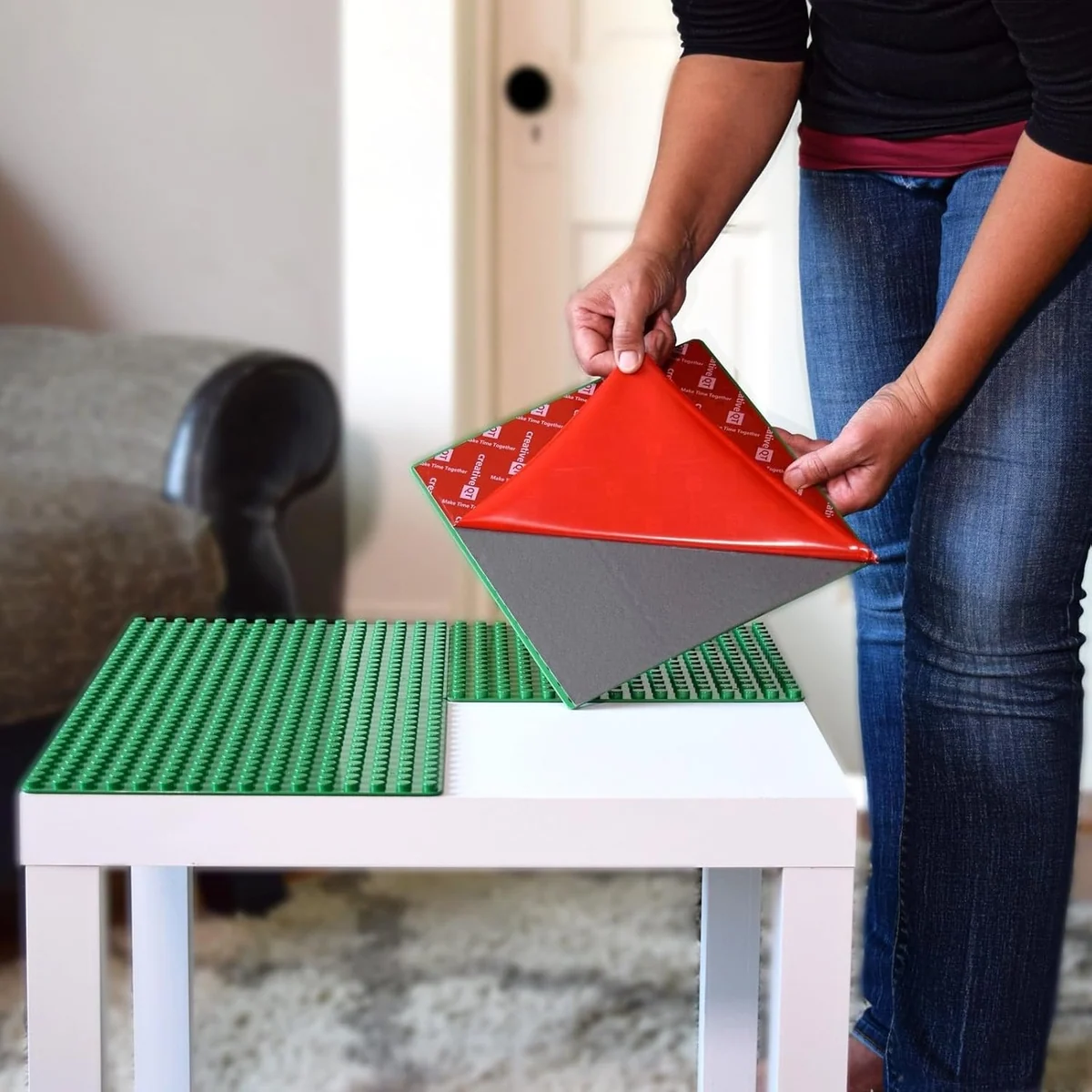
A small square table works best. Four of our 10 inch plates cover a 20 inch square, and two packs cover a 20 by 40 inch rectangle. Measure the top before you buy, and allow a lip of an inch or two around the plates so small hands have somewhere to rest.
The table has to be flat. A plate follows whatever is under it, so a warped top gives you a warped build surface, and bricks near a dip will not hold.
Laying the plates
- Wipe the table with a damp cloth and let it dry completely. Dust is the enemy of adhesive.
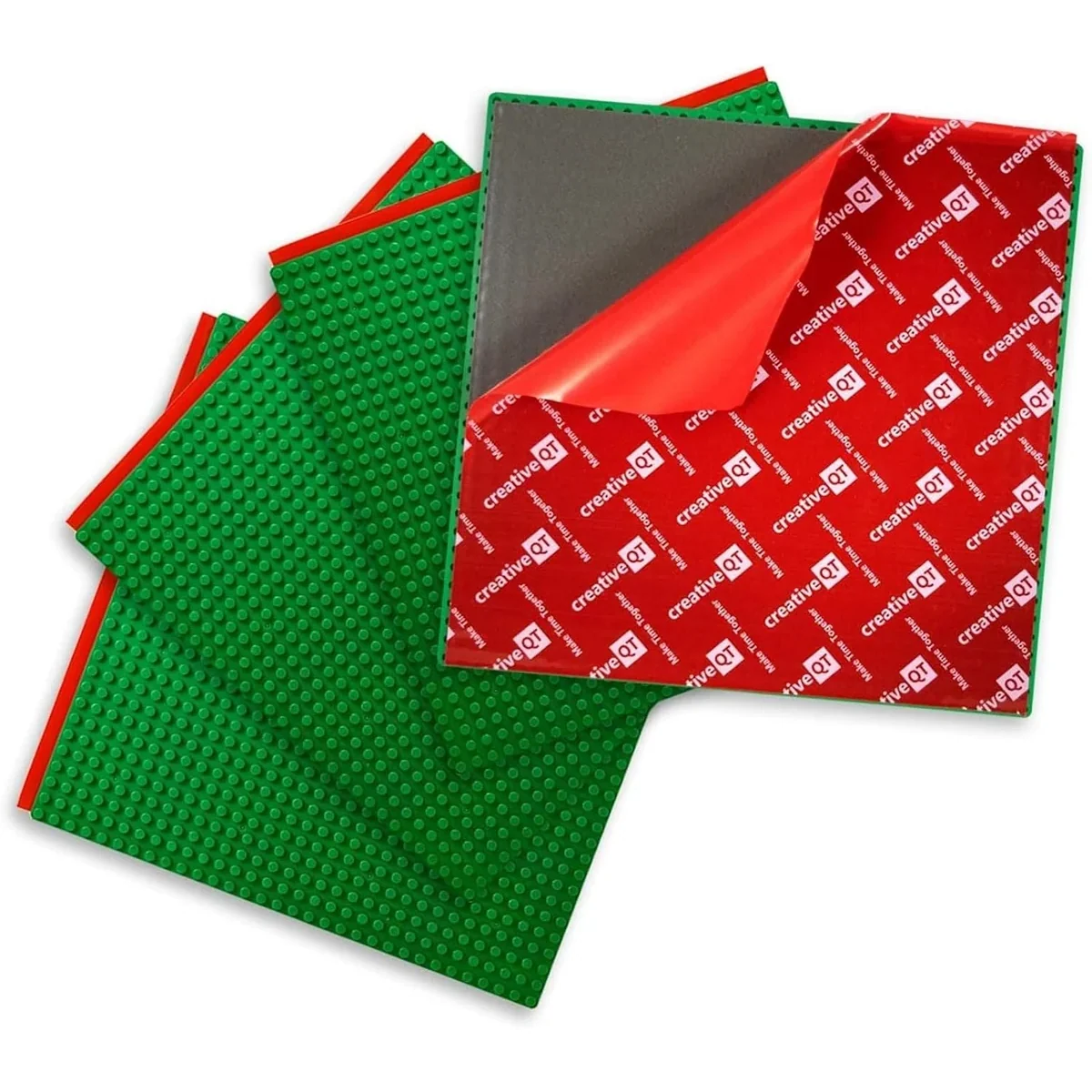
- Lay all four plates out dry first, liners still on, and line up the studs across the joins.
- Peel the liner from one plate, set its edge against a straight line, and press it down from the middle outwards.
- Push a long brick across the join before you press the next plate down. It keeps the stud pattern continuous.
- If you can, leave the table overnight before the first build. Most adhesives grip harder after a few hours of rest.
We used this to make a surface in our playroom for our older son to play blocks without the baby knocking them down. He's very happy with it and it works really well, but Megabloks are kind of hard to click in. They work, but it's a struggle. Still we like it and are very happy we bought it!
Cutting a plate to fit
Owners cut our plates to fit round tables and odd corners with a sharp utility knife. Score the line several times along a steel ruler, then snap the plate along the score. Cut between rows of studs, not through them.
An adult does the cutting. The offcuts are flat and sharp at the edge, and they go in the trash, not in the brick box.
When the wall is the better table
A wall panel suits a room where the table is needed for other things, or a child who builds standing up. Our Play-Up panel comes framed, with hardware, in a 24 by 34 inch or a 34 by 44 inch brick area.
Hang it into studs or with the wall anchors from the box, and hang it low enough for the youngest builder to reach the top row. For most children that means the bottom edge a hand's width above the baseboard.
Small parts and small siblings
Every baseplate family has the same question sooner or later: what about the baby? Bricks are small parts under federal law, and the rule is clear about who they are for.
Children’s products that are intended for use by children under 3 that present a choking, aspiration, or ingestion hazard because of small parts are banned hazardous substances.
U.S. Consumer Product Safety Commission, Small Parts Ban and Choking Hazard Labeling. Read 25 September 2026.
The agency also explains what counts as a small part. It is a physical test, not a guess.
What that means at home
A standard brick fits that cylinder easily. That is the reason brick sets carry a choking warning on the box. The plates themselves are 10 inches across and are not small parts. The bricks that go on them are.
A small part is any object that fits, without compressing and in any orientation, entirely into the small parts cylinder (see Figure 1 at 16 C.F.R. § 1501.4), which approximates the size of the fully expanded throat of a child under three years old.
U.S. Consumer Product Safety Commission, Small Parts Ban and Choking Hazard Labeling. Read 25 September 2026.
A wall panel helps here in a quiet way. Builds at a big child's eye level are out of a crawling baby's reach, and a table with a lip keeps pieces off the floor. Neither replaces watching the youngest child in the room.
Sources we read
- U.S. Consumer Product Safety Commission, Small Parts Ban and Choking Hazard Labeling. Read 25 September 2026.
- U.S. Consumer Product Safety Commission, Small Parts Ban and Choking Hazard Labeling. Read 25 September 2026.
This note is general information about toys and home safety, not medical advice. For anything about your own child, ask your pediatrician.
Products in this note
Play-Up Brick Wall Panel
24 × 34 in or 34 × 44 in
From $34.99 See Sizes and ColorsStackable Baseplates
Four loose 10 inch plates, two blue and two green
4.7 out of 5 (1,033 ratings)$9.99 See Sizes and ColorsStuff 'n Sit Bean Bag Storage
Large, 33 in or X-Large, 38 in
From $16.20 See Sizes and Colors